Securing large appliances in vans: pro methods and gear
Moving a fridge, washing machine, range cooker, tumble dryer, or dishwasher in a van sounds simple enough until you actually stand inside the load bay and realise how easily a heavy appliance can slide, tip, or damage the van itself. That is where securing large appliances in vans: pro methods and gear becomes less of a nice-to-have and more of a must. The right approach protects the appliance, the vehicle, the people doing the lifting, and the things around it. It also saves you from that horrible moment when you open the rear doors and hear something shift. Nobody wants that.
This guide breaks down how professional crews handle appliance transport in the real world: the gear they rely on, the loading order that makes sense, the mistakes that cause trouble, and the practical checks that keep everything stable on the road. If you are planning a home move, helping with a pickup, or arranging a man and van style job, this will help you do it properly and with a bit more confidence.
Why securing large appliances in vans matters
Large appliances are awkward by nature. They are heavy, often top-heavy, and full of parts that do not love vibration. A fridge can lean out of balance, a washer drum can shift, and a cooker can scrape the van floor if it is not restrained. Unlike flat-packed furniture, these items often have rigid corners, removable doors, glass panels, hoses, and fragile controls. One poor turn or sudden stop is enough to create a mess.
It is not only about avoiding visible damage. A poorly secured appliance can move in transit and change the weight distribution inside the van. That affects braking, cornering, and even how the vehicle sits on the road. To be fair, the problem usually starts long before driving. It starts with how the appliance is wrapped, how it is stood, and whether the load is balanced against the van walls and bulkhead.
There is also the human side. Lifting and manoeuvring a washing machine in a narrow driveway or down a shared hallway in winter, with wet shoes and low light, is exactly where bad habits show up. A rushed lift or a loose strap can lead to strain, crushed fingers, or a nasty knock. Safety first is not just a slogan here; it is the difference between a clean job and a painful one.
If your move includes a wider household load, it often helps to think beyond the appliance itself and into the rest of the journey. Services like home moves and house removalists are built around these practical realities, especially where the van has to carry mixed items that all need different restraint methods.
How securing large appliances works
At its core, appliance security in a van is about three things: stabilising the item, isolating it from movement, and protecting it from impact. Professionals usually combine padding, positioning, and mechanical restraint rather than relying on one method alone. That combination is what makes the load survive bumps, corners, and road vibration.
The process typically starts by removing loose parts. Shelves, trays, drawers, hoses, and detachable cords are bagged and taped safely to the appliance or stored separately. Then the appliance is wrapped with moving blankets, quilted covers, or protective pads. After that, it is loaded in a position that matches the item's design and the van's layout. Finally, it is strapped so it cannot tilt, shift, or bounce.
Fridges and freezers are a special case. Some can be transported upright, which is usually preferred when possible, but the exact handling should match the manufacturer guidance and the item's design. Washers and dryers need the drum or internal parts considered carefully, especially if transit bolts are available and the machine is being moved a longer distance. Cookers and range cookers need extra corner protection because one knock against a steel side panel can leave a mark that is annoying forever.
The van itself matters too. A clean, dry load space with anchor points, a bulkhead, and enough usable height is much easier to work with. If you are looking at vehicle choice as part of the job, a dedicated moving truck or removal truck hire setup often gives better control than a smaller vehicle with limited tie-down options.
Key benefits and practical advantages
When appliance securing is done properly, the benefits are immediate and practical. First, damage risk drops sharply. That means fewer dents, fewer scratches, fewer broken hinges, and less chance of arriving with a machine that will not power up because it took a hard knock.
Second, the job becomes calmer. Yes, calmer. Once a fridge is braced correctly and a washer is strapped off, you stop worrying about every bend in the road. The driver can concentrate on driving, not on wondering whether a 90kg appliance is inching sideways behind them.
Third, it makes loading quicker over time. This sounds odd, but true. Crews with a reliable method do not waste time re-adjusting items every few minutes. They know what goes against the wall, what needs blanket protection, where the strap should sit, and how much compression is enough without crushing packaging or fittings.
There is a business benefit too. Reliable appliance handling protects reputation. If someone has booked a man with van service or a larger commercial move, they expect the job to look tidy and controlled. Appearances matter, but so does the lived experience of a job that simply goes smoothly.
Expert summary: The best appliance moves are not the ones with the most gear. They are the ones where the gear, the load order, and the tie-down points all work together.
Who this is for and when it makes sense
This topic matters to quite a few people. Home movers, tenants shifting white goods to a new address, landlords collecting replacement appliances, small removal teams, and businesses moving equipment between sites all face the same basic challenge: big items do not naturally behave inside a van.
It is especially relevant if you are moving one or two large items rather than a fully furnished house. That is a common scenario for furniture pick-up jobs, appliance marketplace collections, student moves, or replacing a broken machine with a second-hand one from across town. In those cases, the vehicle space is often used more efficiently, but the margin for error is smaller. One unsecured appliance can ruin the whole trip.
This also makes sense for office or commercial settings where appliances are not household white goods but similar heavy items such as chilled cabinets, vending units, or kitchen equipment. If the load is part of a broader business relocation, the planning standards are closer to those used in commercial moves and office relocation services, which usually means more attention to access, timing, and load stability.
Truth be told, if you are only moving a small compact appliance a short distance, you may not need every professional trick in the book. But once an item is tall, heavy, or awkwardly balanced, proper restraint is worth every minute.
Step-by-step guidance
1. Measure the appliance and the van space
Before you lift anything, check the width, depth, and height of the appliance and compare that to the van's load bay. Sounds obvious, but this step gets skipped all the time. Door frames, hatch angles, and awkward corners matter just as much as the dimensions on paper.
2. Clear and prepare the route
Make sure the path from the property to the van is clear. Open doors fully, protect thresholds if needed, and remove anything that could catch a handle or wheel. A clean route saves time and lowers the chance of knocks and scrapes.
3. Disconnect and secure loose components
Disconnect power, water, and gas only if you are trained and authorised to do so. If not, use a qualified person where necessary. Remove loose trays, internal shelves, ice boxes, hoses, and cables. Place smaller parts in a labelled bag so you are not hunting for them later.
4. Wrap the appliance
Use blankets, corner pads, bubble protection where suitable, and tape that will not leave a nasty residue. Protect the sides and edges, not just the front. Appliances get damaged on corners, handles, and feet more often than people expect.
5. Load in the right order
Load the heaviest and least flexible appliances first, usually against the bulkhead or the most stable wall. Keep the centre of gravity low. If you have multiple items, arrange them so the load is balanced side to side. A fridge sitting on one side of the van with a pile of lighter boxes opposite it is better than nothing, but not ideal if the side load shifts in motion.
6. Use straps, load bars, and blocking
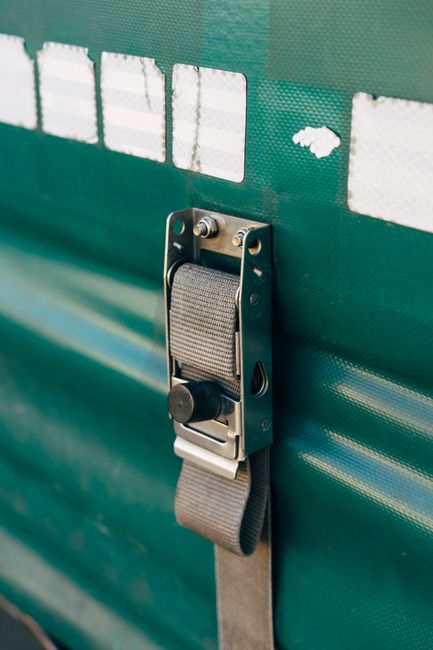
Run ratchet straps through approved anchor points and tighten them so the appliance cannot move, but do not compress fragile panels or damage seals. Where useful, place load bars or timber chocks to stop movement at the base. The goal is control, not brute force. More tension is not always better, which is annoying but true.
7. Test the load before departure
Give the appliance a firm shake test by hand. If it moves, fix it. Then close the doors, drive a short careful loop if possible, and recheck after the first part of the journey. Small adjustments early save much bigger problems later.
Expert tips for better results
Professionals do a few small things differently, and these details add up.
- Keep the heaviest appliance against the strongest part of the van. The bulkhead or a reinforced side wall is usually best.
- Use two layers of protection when needed. A blanket plus a corner protector is often better than one thick wrap alone.
- Protect the floor. A non-slip mat or sheet under the appliance reduces sliding and helps preserve the van deck.
- Mind the door swing. Many damage claims start with a careless rear-door knock against a protruding handle.
- Label cords and hoses. This is a tiny task, but it makes reinstallation much faster.
- Check appliance balance. If a washer feels uneven, stop and reset it before the drive starts.
One of the nicest habits in a busy day is pausing for ten seconds and looking at the load from behind, from the side, and from the door opening. That little visual check catches things your hands miss. You will notice if a strap is rubbing, if a corner is exposed, or if the appliance is leaning ever so slightly. That lean is never "probably fine".
If you are regularly moving heavy goods, it is worth thinking about the vehicle and safety setup as a package. The right equipment, plus clear handling standards, goes a long way. Pages such as insurance and safety and health and safety policy can also help set expectations around safe working practice, even before the van is loaded.
Common mistakes to avoid
The biggest mistake is assuming a heavy appliance will stay put because it is heavy. Weight helps, but weight alone is not security. A large machine can still slide if the floor is smooth and the driver has to brake suddenly.
Another common error is wrapping too loosely. A blanket that flaps around is not protection; it is just fabric. Likewise, over-tightening straps can crush controls, bend panels, or damage door seals. The best tension is firm and even. Not heroic.
People also forget to separate fragile accessories. Shelves, trays, pans, and cables can rattle around and chip another item. It is a small thing, but small things cause the annoying problems later, the kind that show up after dark when you are trying to install the appliance and one part has gone missing.
Loading an appliance on a poor angle is another trap. A fridge or washing machine that leans into a corner or rests awkwardly on a handle can shift under road vibration. And once it has started moving, the strap system works harder than it should.
One more: not rechecking after the first few miles. Professional crews know that a load can settle. If you started with good tension, that is great. Still check. A quick stop is better than a quiet disaster.
Tools, resources and recommendations
You do not need a warehouse full of specialist kit, but you do need the right basics. Here is the gear that usually makes the biggest difference.
| Gear | What it does | Best use |
|---|---|---|
| Moving blankets | Protects surfaces from scrapes and knocks | Fridges, cookers, washers, dryers |
| Ratchet straps | Secures items to anchor points | Most large appliances |
| Load bars | Stops side-to-side movement | Mixed van loads or taller items |
| Corner protectors | Prevents strap wear and panel damage | Sharp-edged appliances and cabinets |
| Non-slip matting | Reduces sliding on the floor | Single appliance moves |
| Appliance dolly or sack truck | Helps with safe rolling and positioning | Short-distance movement and access routes |
| Workbench gloves | Improves grip and hand protection | Lifting and strap handling |
For a simple household move, a blanket-and-strap setup may be enough. For more complex trips, especially with multiple white goods, a van with proper tie-downs and a professional moving layout is a better fit. If you are hiring vehicle capacity separately, look at moving truck and removal truck hire options rather than assuming any van will do the job comfortably.
If you are also dealing with packing around the appliance, the value of proper wrapping goes up fast. A good packing and unpacking service can reduce the chance of missing parts, loose trays, or rushed preparation on the day.
Law, compliance, standards, or best practice
For appliance transport in the UK, the safe approach is to treat the load as part of your general duty of care. The exact legal details can vary depending on the vehicle, the type of goods, and whether the move is domestic or commercial, so it is wise not to guess. In practice, most professional operators follow established load restraint principles: secure the load so it cannot move under normal driving conditions, use suitable equipment, and avoid unsafe overloading or poor weight distribution.
Best practice also means checking the appliance manufacturer's handling notes where available. This is especially relevant for fridges, freezers, and washing machines. Some items have upright transport preferences, some may need transit bolts, and some should not be tilted beyond a certain angle for long periods. If you are unsure, it is better to pause and verify than to "just get on with it".
For commercial jobs, good documentation matters. Notes on vehicle condition, load condition, and any visible damage at collection are simple but useful. They help reduce disputes and make the handover clearer. In broader moving work, it is also sensible to review terms and conditions, payment processes, and insurance expectations in advance. That is not overkill. It is just tidy practice.
A sensible business will also think about environmental responsibility. Reusing blankets, protecting items properly so they do not become waste, and planning journeys to avoid unnecessary repeat trips all support the ethos behind recycling and sustainability. Not glamorous, perhaps, but it matters.
Options, methods, or comparison table
There is no single correct way to secure large appliances. The best method depends on the item, the distance, and the vehicle. This comparison gives a practical feel for the main options.
| Method | Pros | Limitations | Best for |
|---|---|---|---|
| Blankets only | Fast, gentle on finishes | Does not stop movement on its own | Very short repositioning or protected load bays |
| Blankets + ratchet straps | Strong balance of protection and restraint | Needs anchor points and careful tensioning | Most appliance moves |
| Load bars + straps | Excellent lateral control | Needs compatible van layout | Mixed loads and multiple appliances |
| Non-slip mat + strap system | Simple and effective on smooth floors | Less effective for very tall or heavy items | Single appliance collections |
| Professional removal setup | Best control, efficient workflow | Higher cost than DIY approach | Valuable or awkward appliances, commercial moves |
For most people, the sweet spot is a strapped, padded load in a suitable van. That gets you most of the benefit without making the process overcomplicated. If the job is more demanding, a specialist service can be worth it simply for the calmer handling and better equipment.
Case study or real-world example
A typical Saturday job might look like this: a family is moving from a flat in south London, and they want their fridge-freezer and washer taken to a new house across town. The access is awkward, the lift is small, and the van needs to park on a busy street with limited time. Nothing dramatic, but enough moving parts to make the morning feel slightly chaotic.
The crew arrives, checks the route, and lays protective material where the appliance has to pass over a doorway threshold. The washer is disconnected, drained properly, wrapped in blankets, and loaded first so it can sit against the van wall. The fridge is then brought out upright, padded on the corners, and secured beside it with straps and a load bar so there is no lateral movement. Small items, like hoses and shelf packs, are labelled and stored together.
On the road, the driver takes the first few corners gently, then stops after a short stretch to check the straps. One strap has settled slightly, so it is tightened a touch. That is the whole difference between a routine delivery and a problem later on. The appliances arrive clean, intact, and ready for installation. No drama. Which, honestly, is the best kind of moving story.
This is also where a good local moving setup helps. If the job had included additional household furniture or a few awkward items, a broader home moves arrangement would have made the planning easier from the start.
Practical checklist
Use this as a quick pre-departure check. It is short on purpose.
- Measure the appliance and confirm it fits the van safely.
- Disconnect services where appropriate and safely.
- Remove loose shelves, trays, hoses, and cables.
- Wrap the appliance with blankets or protective pads.
- Check the van floor is clean and dry.
- Place the appliance against a stable wall or bulkhead.
- Use non-slip protection if needed.
- Secure with ratchet straps or load bars at the correct points.
- Confirm the appliance does not rock, tilt, or slide.
- Recheck the load after the first part of the journey.
- Keep keys, fixings, and accessories together.
- Document any pre-existing marks if the job is commercial.
If you tick all of those off, you are already ahead of a lot of rushed move days. And yes, the last two minutes of checking are usually the most valuable two minutes of the job.
Get a free quote today and see how much you can save.
Conclusion
Securing large appliances in a van is really a mix of judgement, restraint, and decent gear. The best outcomes come from treating every machine as a load that needs its own plan, not just something heavy that can be shoved in and hoped for. A padded surface, the right strap angles, stable positioning, and a quick recheck on the road make a bigger difference than most people expect.
If you remember just one thing, make it this: heavy does not mean stable. Stability has to be built. Once you start looking at appliance moves that way, the whole process becomes clearer, safer, and much less stressful.
And when the van doors open at the other end and everything is still sitting exactly where it should be, you will feel that little bit of relief that makes the whole effort worthwhile.
Frequently Asked Questions
How do you secure a large appliance in a van properly?
Start by padding the appliance, removing loose parts, placing it against a stable wall or bulkhead, and using ratchet straps or load bars through proper anchor points. Then check for any movement before driving.
Should a fridge be transported upright?
Usually, upright transport is preferred when it is practical and consistent with the appliance guidance. If an appliance has to be tilted or laid differently, it should be handled cautiously and only when appropriate for that model.
Can I move a washing machine without transit bolts?
Short moves may be possible depending on the machine and handling method, but transit bolts are typically recommended where the manufacturer provides them. If you are unsure, check the machine instructions before moving it.
What is the best strap for securing appliances?
Ratchet straps are usually the most practical option because they provide firm, adjustable tension. The strap should be used with care, though. Too loose and it will not hold; too tight and it may damage the appliance.
Do I need a moving truck for one or two appliances?
Not always, but a vehicle with proper anchor points and enough space makes the job much safer. For heavier or more awkward items, a dedicated moving truck or removal truck hire can be the better option.
How do you stop an appliance sliding on the van floor?
Use a non-slip mat, position the appliance correctly, and secure it with straps or load bars. Clean, dry floors help a lot too. Moisture and dust can make sliding worse than expected.
What should I wrap a large appliance with?
Moving blankets or quilted pads are the usual first choice. Corner protectors can help, especially where straps might rub or where the appliance has sharp edges. Bubble protection can be useful in some cases, but it should not replace solid padding.
Is it safe to strap appliances to the side of the van?
Yes, if the van has suitable anchor points and the load is padded correctly. The appliance should be secured against movement without crushing panels or stressing seals. The restraint should match the load, not just hold it "somewhere near" the wall.
What is the most common mistake people make?
The most common mistake is assuming the weight of the appliance will stop it moving. It often does not. A heavy item can still slide, tip, or shift if the floor is smooth or the van has to brake sharply.
When should I use professional help instead of DIY?
Use professional help when the appliance is very heavy, valuable, awkward to access, or being moved with other items that need careful stacking. It is also worth it if you are short on time or do not have the right restraint gear.
Do I need to think about insurance when moving appliances?
Yes, it is wise to understand what cover applies before the move. Check what the operator's insurance and safety arrangements say, and make sure you know how claims or damage issues are handled if something goes wrong.
Can I put a cooker on its side in a van?
Some cookers may be transported in more than one orientation depending on the model and guidance, but it should never be guessed. The safest answer is to follow the manufacturer instructions and use the most stable position possible.
How can I tell if the load is secure enough before driving?
Try to move the appliance by hand after strapping it. If it rocks, shifts, or compresses the protection unevenly, it needs adjusting. A quick visual check from the rear doors often reveals small problems straight away.
Do commercial appliance moves need different handling?
Often, yes. Commercial jobs may involve larger items, tighter timelines, and more documentation. The same core securing methods apply, but the planning is usually more detailed and the expectations around consistency are higher.